Showing posts with label water. Show all posts

Friday, September 7, 2012

Earth-Friendly Meal Preparation

As an environmentally-concerned vegan, I have to put a lot of thought into how I prepare my food and what goes into it. I've already posted about the latter (the food you eat), but today, I want to talk about the former (how you prepare it).
Like most people, I do enjoy a hot meal, and am not particularly fond of half-cooked or boring foods. However, eco-friendly meal prep can be so much more than that-- read on to find out how!
  • Try a solar oven before winter settles in! You can find out how to make one here: http://www.ehow.com/how_2083_make-solar-oven.html. Please note that it may take twice as long for the food to cook in a solar oven, and you should not use it to cook raw meat or other foods that must be cooked in order to be safe. You can make vegan cookies, re-heat veggie lasagna, and more, and from what I've heard, it works!
  • Eat a cold meal once in a while. Chickpea salad, PB&J, vegetarian sushi, bean salad... the list is endless. To see a portion of the endless creative recipes you can use, please see http://goneraw.com/.
  • Instead of using an electric mixer, mix those ingredients manually by hand-- use that muscle power!
  • Buy food in large containers that can be re-used.
  • Avoid using plastic wrap to cover your food in the fridge. Either cover it with a plate or transfer it to a resealable container.
  • When washing food, put it in a bowl filled with water instead of running each piece individually under the tap.
  • Raw Vegan Food can look just like typical westernized food!
    Photo courtesy of www.lucidnutrition.com
    Until next week!

Tuesday, August 7, 2012

Top Ten Rules of Eco-Friendly Camping and Explorations in Nature

Hi! I'm back from camping. Here is what I have to say about keeping it eco-friendly, both from my previous knowledge and what I have learned over the last few days.

My pup-tent from when I was camping with my parents and sister right before I went into Grade 8. (not a recent camping trip)
  1. "Take nothing but pictures, leave nothing but footprints" is an excellent rule to live by. Nature is a sacred place, and in order to be a respectful visitor to a natural spot, it is important to leave it how you found it-- or in better condition, if you clean up trash.
  2. Don't bring your own wood! This is widely publicized, but I feel I ought to re-inforce it. If you bring your own wood, tiny insects hiding just under the surface could make their way into the eco-system. These insects-- such as the emerald ash borer-- could completely destroy the region. Only buy wood from the campground office or store. If there isn't one, you can collect dry wood from the surrounding areas-- but make sure to take only what you need!
  3. Drink the camp water, assuming that it has been tested and is safe. If you don't trust the camp water for whatever reason, then bring your own in large containers, as we did while camping. The worst thing you can do is bring along a multitude of little water bottles.
  4. Don't feed the wildlife; this will only make them more trusting of humans, which will in turn make people more keen to get rid of them.
  5. Camp food-- oh, how easy it is to slack off on healthy and eco-friendly eating while camping! Still, you should try to avoid the highly packaged foods, like individually-packaged cookies, granola bars, juice boxes, soy milk :) /cow's milk :( cartons, and little boxes of raisins. Instead, bring bags/containers of non-perishables and/or hardy foods, like bags of trail mix, re-usable containers of oatmeal cookies and snack foods, cans of beans and soups (if you are lucky enough to have the space to store the cans), carrots and other root vegetables, potatoes and sweet potatoes, rice/quinoa/oatmeal packages, etc. I am guilty of using some of the pre-packaged foods while camping, but I used the better bulk-packaged foods, too.
  6. Use the car as little as possible while camping. My aunt wanted to drive to the ampitheatre at the campground for a show, but I told her that it was only a 5-minute walk, so we walked there instead. For longer distances you need to travel, try to combine as many of your outings as possible into one car trip. "Outings" refers to things like shopping, hikes, and sight-seeing.
  7. S.V.P.-- please do not use paper plates and plastic cutlery! Whenever I had the choice while camping, I would use the re-usable plates. Not only are disposable plates wasteful, they are also often toxic!
  8. There really is no need to purchase souvenirs. If you are completely stubborn about buying souvenirs or gifts while away, please buy things that you need/can use, like a tin of candies, a pen or pencil or eraser, a sun-hat (if you need one), some re-usable containers, or a wrist-watch. (Remember: "souvenir" is exactly the same to the French word "souvenir", or "to remember". Photographs or a journal are far more likely to spark your memory than a touristy mass-produced gizmo ever will.)
  9. There is also no need to bring excess electronics! If you are camping with other people, just bring one cell phone for safety reasons, and leave the other ones at home. Video games, laptops, ipods and mp3 players, portable DVD players, and the rest can stay at home.
  10. When you can help it, do not stray from the path. Not only does wandering into the undergrowth trample down the ecosystem, it also increases your risk of getting a poison ivy (or stinging nettle or whatever) rash or getting lost.
  11. *Bonus* Read the rest of my blog for tips to take with you!
    Have fun camping! Photo courtesy of http://www.showroom411.com/dir/Living-Green/Outdoor-and-Recreation.html


Friday, June 29, 2012

Yes, You Can Reuse Coffee and the Dregs!

If you are an eco-concious coffee drinker, you might feel bad about wasting old coffee that has been sitting for a while, as well as throwing away the dregs. But take heart! There are ways you can re-use, yes, coffee!
coffee-cup-01
Courtesy of http://mikerowse.com/?attachment_id=136
Gardeners, you can pour the old coffee remnants onto the soil of plants that need an acidic environment, such as blueberries, kiwifruit, garlic, serviceberry, Welsh onion, Japanese angelica, horseradish, wildginger, birch, camellia, coriander, lemon grass, fox glove, and more. Click here for a longer list complete with Latin names and detailed information! As for the coffee grinds, place them around plants to repel slugs.
Amateur and proffessional chefs, use the stuff that has gone bitter in the coffee maker/teapot in sauces. Add it to chili, vegetable marinades, and more!
Craft-loving folks, use it to stain fabric. On http://www.recyclethis.co.uk/20111123/how-can-i-reuse-coffee-thats-sat-on-the-plate-for-too-long, Carol says that this works wonderfully.
To those of you looking for inexpensive beauty tips, try re-using the grounds as an exfoliant for your skin. And to remove smells from your hands, wash them in coffee grounds. You can even use them to dye your hair and make it shiny!
Put some of the dried grounds into a thin bag and put it in your house, closet, etc. for a nicer smell.
Isn't this amazing? Remember to buy organic, fair-trade coffee, everyone!
Until next week...

Friday, June 22, 2012

What's Up With Sunscreen? (Besides the Sun?)

There are so many opposing viewpoints on the topic of sunscreen nowadays. The mainstream people and the sunscreen companies will tell you, "Wear plenty of sunscreen today!" And yet, many sunscreens are toxic. Just when we turn around, though, to declare that all-natural sunscreen will fit our purposes nicely, we read another article saying that zinc oxide, a common component in "natural" sunscreen products, can cause the formation of free-radicals when exposed to sunlight, which in turn could cause cancer! And anyway, say some people, you need sunlight for vitamin D, right?
My word! It seems that this whole sunscreen business is a huge waste of time, not to mention a possible health hazard.
It is also bad for the environment in some cases. For example, if you go swimming at the beach while wearing sunscreen, you'll be accidentally contaminating the lake waters. Once I went swimming in a completely pristine lake, and it made me feel a bit guilty to see all my sunscreen fog up the water before diffusing into the whole lake. Even if you don't go into the water, the sunscreen will still be washed away down the drain at a later time, only to end up comtaminating some place far away years later. After all, what goes down the drain never really goes "away"-- it has to end up somewhere. Worst of all or best of all, depending on how much of an eco-martyr you are, it would end up soaking into your skin and contaminating your body. Not very fun, eh...
So now what? I definitely don't want you to stay inside all summer. The answer is actually quite simple. Wear a light khaki or white long-sleeved shirt on top of your T-shirt or tank-top. You can also try a nice hat to cover your scalp and face.
Image Detail
Courtesy of depositphotos
There are plenty of different styles. There are plain ones for men and women, as well as uber-fashionable ones.
What makes wearing light-coloured clothing instead of sunscreen so awesome is that people have been doing it for thousands of years. The ancient Greeks were famous for their togas, remember, and ancient Egyptians wore light coloured tunics.
If you already have some light long-sleeved clothes, that is great. If not, why not buy a nice shirt, or make one yourself? Make sure it is made from organic materials!

Friday, June 8, 2012

If you HAVE to...

I understand that being eco-friendly is not very appealing if you feel like you must deprive yourself in order to succeed at it. Sometimes, I just (feel like I) need to listen to music, play video games, or watch a movie. But surely there are more energy-efficient ways to do such things?

And so...
If you HAVE to listen to music, use an MP3 player instead of a loud CD player.
If you HAVE to play video games, use a Nintendo DS instead of your computer or X-Box.
If you HAVE to watch a movie, do it at a movie theatre or invite a friend over to share the fun.
If you HAVE to have a bath instead of a shower, use lukewarm water-- not steaming water.
If you HAVE to do unneccessary things on the Internet, use a laptop instead of a desktop (it saves energy).

How did you all do with last week's challenge, by the way?

Friday, June 1, 2012

Happy Birthday to Me... and The Importance of Getting Into Nature

Last weekend, I attended the Ontario Nature Youth Council Leadership Retreat in Kettleby, ON. It was a lot of fun. We did group activities in nature and teambuilding challenges, and we also got into a debate about how the council should be governed. I learned something while I was there, too-- that connections to nature are an integral part of an environmentally-concious person's life.
Many of the other members of the Youth Council seemed to have spent a lot of time in nature, and this fueled their passion toward it. It makes sense; you wouldn't want to destroy the places that you have grown up in, would you? This is why I am going to talk about different ways you can get more in touch with the natural world...
  1. Go for a walk or bike ride at the park or in the nearby woods.
  2. Sit under a tree and read a book.
  3. Go bird-watching-- in your backyard or in the forest.
  4. Have a (vegan) picnic outside.
  5. Have an outdoors party.
  6. Canoe, kayak, paddle-boat, or row-boat gently down the stream.
  7. Search for reptiles near a marsh.
  8. Use a solar-cooker to heat your food.
  9. Roller-skate or skateboard around the block.
  10. Hug a tree today, seriously.
  11. Go camping or stay at a cottage.
  12. Paint and sketch natural scenes. No need to work from a photograph-- just get out there and do it!
  13. Go to a tree-planting with the local naturalists' club.
  14. Join the local naturalists' club (or another similar organization).
  15. Take your laptop outside to check your e-mail.
  16. Stand outside in the rain (a very nice thing to do!).
  17. Go for a swim.
  18. Listen for frogs and crickets at night.
  19. Learn to identify trees, herbs, and other plants, as well as insects and other animals.
  20. Garden-- see my gardening post for more ideas.
  21. Set up a birdhouse or a bat box (make sure they are safe from cats!).
  22. Pick up garbage down by the river or in another natural spot.
  23. Visit a wild animal rehab center (I'll probably be volunteering at the local wild bird care center this summer).
  24. Go geocache hunting in a natural setting.
  25. Stargaze.
  26. Watch the clouds drift by.
  27. In winter, go skating, skiing, or snowshoeing.
  28. Dry your clothes on a clothesline in your backyard.
  29. Practice a musical instrument outside.
  30. Take your companion animal on a walk (on a leash, and safely, of course!).
Here's a challenge: I dare you to try at least five of these things in the next week! Try it out, okay?
     
    My Birthday! This vegan cake looks delicious. Photo Courtesy of Auntie Loo's Treats


Friday, May 25, 2012

Summer Ways to Save Energy And Water (And Money)

Today I was going to do a post on Sustainable Transportation: Part II, but I didn't know what to say, so then I was going to do a Super-Duper Duct Tape Post, but I just learned that the adhesive part of duct tape is made from part of a dead goat (!!!), so I think I will post about, um...
How about Summer Ways to Save Energy And Water (And Money)?
The summer is a great time to go eco-friendly, or, if you are eco-friendly already, it's a great time to take things up a notch. Remember, every kilowatt saved = another tiny patch of land left intact! And those tiny bits of land add up, believe me.

Summer Saving Tip #1: Air-Drying
There are many things that you can air-dry, but the main ones are dishes, clothes, and your hair! When you use the dishwasher (which, by the way, is MORE eco-friendly than regular washing by hand), only set the cycle on the wash setting; once they are clean, open the dishwasher and leave them to dry-- or dry the dishes by hand if you are in a rush to have usable dishes. You can air-dry your clothing by hanging up a clothesline outside and hanging the clothing on the line with-- you guessed it-- clothespins! As for your hair, you can always go out in the sun and read a book while you are waiting for your hair to dry after a shower. (Brush or comb your hair every few minutes to make sure that it stays in place.)
Summer Saving Tip #2: Unplug It!
Computers, lights, little screens on DVD players that tell you the time... it all uses a lot of energy. In fact, 11% of your energy bill might be going towards keeping all your appliances on standby! Turning them off may not be enough-- instead, plug all these things into a few power bars and unplug the power bar when you don't need them.
Summer Saving Tip #3: Sustainable Watering Practices
Most of you who are reading this probably have a lawn and/or garden. It may be tempting to turn on the sprinkler to water the lawn or switching on the garden hose to water your plants, but there are better ways to do things! For example, you can collect rain water in open-top watering cans or a rain barrel (but let me tell you, I just use a little green watering can, and it works fine). Please don't bother watering your lawn-- it's grass! It can take care of itself. :)

Summer Saving Tip #4: So You Think You Need Air Conditioning? Really?
Humanity has lived for thousands of years without air conditioning. Consider also that stress levels and some types of illness have taken a sharp incline in recent years, many of which are related to overindulgence. Withstanding a little heat keeps you strong! If the heat really starts to get to you, perhaps you need some cold water, or even a fan or two to keep the air circulating.

P.S. For a long list of ways to be more eco-friendly, check out http://discovermagazine.com/2008/jan/25-surprising-and-simple-tips-for-a-greener-life. Be aware, however, that compact fluorescents have mercury in them. It may or may not be worth switching to these lightbulbs. But apart from that, it is a good list.

Friday, May 18, 2012

Sustainable Transportation: Part I

Did you know that transportation is responsible for 22% of all CO2 emmissions? Carbon dioxide may be just one of many gases, but it should give you an idea of the percentage of other gases emmited by transportation-- including the dangerous nitrogen oxides and ozone.
Because transportation has such a heavy impact on our environment, we need to adjust this practice drastically. Here are some of my suggestions:
  • Don't commute by car! I know, some of you (feel that you) must commute, because you live such a long way away from the place that you work. But that is no excuse, really. Find a job close to home, or find a home close to your job. If neither of these appeal to you, take the bus or find someone who is driving along the same route so that you can carpool.
  • Make it a rule: whenever you are going somewhere "for fun", like the movies or to a friend's house, rule out the car and bike, walk, or take public transit.
  • If you have a car, give it to someone going car-shopping. Or use it as a carpool car.
  • Long distance trips should be made by train and charter bus. That includes summer vacation-- imagine the rustic calmness of the train, instead of the high-tech stress of a car or plane!
  • If you are completely stubborn about having a car, at least make sure that your next one is an energy-efficient hybrid or one run by restaurants' leftover vegetable oil (yes, some of them can run off used oil scraps!).
Image Detail
Electric Scooter: Courtesy of http://theitsaboutelectricscootersblog.blogspot.ca/
You know, I was thinking about what a future might be like if we all took action now. If we stopped buying cars and saved them for the sick, impaired, and threatened. If we all bicycled, walked, skateboarded, scootered, and roller-skated. If we used mopeds, electric bikes, and electric scooters when we couldn't get places with our own power. If long-distance travel entailed trains and buses...
And you know what gets me angry? That future-- that wonderful, attainable future-- is being stolen from me a little bit more every day. We have already hit peak oil, which means that from now on, we will keep finding less and less oil in the ground. The prices will steadily increase until eventually, only the billionaires can afford it. And one day it will be all gone. Sooner or later, industry will collapse, and we won't even be prepared! Life may get very hard from that point forward. We will be forced to be self-reliant. I am fine with growing my own vegetables, but some things, like heating my house and going to school, will suddenly become so complicated! A sustainable yet still comfortable future is not only being stolen from me, but also from you, your neighbours, your current/future children, and all other life forms on the planet. The thieves are the people who carelessly suck away all the energy they want; of course, they often do it unknowingly, so you can't hate them for it, but that doesn't make what they are doing any more ethical.
I figured I would have to rant a bit about the reasons why this matters so much in order to convince you to make wise transportation choices. After all, changing the way you commute is a big deal. But it is oh-so-important. It can be used to measure what kind of person you are choosing to be in your life. It also dictates how the Earth will exist in the future-- whether many species, including our own, will even survive!

Friday, May 4, 2012

Eco-Savvy Remedies

Do you ever wish that health care could be more eco-friendly? I do.
The current state of our healthcare system is disastrous. Toxic chemicals from pills are polluting our waterways and killing off fish. People are feeling ill and not knowing why. And they are suffering from side-effects of medications that they are supposedly taking to feel "better".
Surely there has to be a way to solve these problems and create a win-win situation for humans and the environment?

Welcome to the world of alternative medicine!

Alternative medicine uses methods other than medications to help treat health problems. Alternative health practicioners use herbal remedies, essential oils, yoga, meditation, acupuncture, art and music therapy, and many other treatments to help people feel their best. And the best part is this: there is no harm done to the environment!
Herbal remedies, for example, are an amazing way to treat virtually any illness. They typically are drunk as tea. Recently, I have started drinking herbal tea (organic, fair trade, and forest-friendly, of course), which is amazing for stress relief, and it helps with sleep. And herbal teas can help with any ailment, from indigestion to anxiety to headaches to Alzeimer's Disease! There's absolutely nothing to lose (except a couple dollars), as there are either no or very few side effects.
I recommend that you go to your local library and take out a book on herbal medicine. I found some great books in the health section at my library. Herbs are definitely a viable alternative to medications that leave you groggy and sometimes in pain.
The other treatments can be found in shops and alternative clinics around the world. Although I haven't done much with essential oils or acupuncture, from what I have read they seem to be very effective.
Be sure to check back for my next post next Friday!
Carolyn
"[W]hich would you rather have in your neighbourhood: another chemical company or a field of rosemary?" Brigette Mars, A.H.G., from Healing Herbal Teas

Friday, April 20, 2012

Get Set for Earth Day... How Will You be the Change?

Earth Day is on Sunday, April the 22nd. Personally, I feel like it is an extremely important day of the year. On Earth Day, all of your environmentally-friendly actions seem to really count. Of course, they count on all the other days of the year, too-- but there is so much more motivation to be green on Earth Day. It might surprise you that I, as an eco-blogger, sometimes run low on motivation to help save the planet, but believe me, I do. It happens to everyone. What really matters is overcoming that and doing great things anyway!
Anyway, here are some of my ideas for going even greener this Earth Day:
  1. Start a new habit. Sometimes it only takes a little bit of time and energy to start up something that can last year round. For example...
    1. Set up a clothes rack in your basement or clothesline in your backyard. This way, you can get into the habit of drying your clothes without the clothes dryer. By doing this, you will save $85 (US) per year and untold amounts of electricity!
    2. If you aren't already a vegetarian, go out to a vegetarian restaurant to discover some delicious vegetarian foods (many of which will also be organic and vegan). You may be able to pick up a cookbook with great recipes. What would be a better time to start a new vegetarian lifestyle than on Earth Day?
    3. Make some candles or start using rechargeable flashlights for use in the evening. Walking around your house at night can be an amazing experience with a candle in your hands!
    4. Another good idea I found on the Internet is to get into the habit of reflecting. Reflect on your way of life and how it affects those around you (and those who are far away from you!). The more you think about it, the easier it will be to make necessary changes to your lifestyle.
  2. Attend an Earth Day event in your community. For those of you who live in Ontario, you can participate in Ontario Nature's Our Special Spaces events that include tree-plantings etc. (I'll be going to the one at Lemoine Point in Kingston.) Otherwise, simply type in "[your city name] Earth Day events" on a search engine to find some. If you happen to be reading this on or after Earth Day, you might still be able to find "Earth Month" activities that last through April to take part in.
  3. Sit down and plan out your eco-friendly goals for the next year. You can get started by reading my New Year's blog post, "Make Your New Year's Resolutions Sustainable", at http://hugatreetodayseriously.blogspot.ca/2011/12/make-your-new-years-resolutions.html.
  4. Educate yourself! Simply read a book on environmental issues or eco-friendly tips. You can get one at the library. Many people have said that one of the best things you can do for the planet is to educate yourself. This is probably because knowledge inspires wisdom, and wisdom inspires good choices...


As Zachary Shahan said on planetsave.com, "Today should still be Earth Day, perhaps, but it should also be the beginning of Earth Week, Earth Month and Earth Year. And Earth Year should be an annual thing." (See http://planetsave.com/2010/04/22/what-to-do-on-earth-day/ for the rest of the article.)
Earth Day is all about really making a difference... So how will you be the change this year?

Friday, April 13, 2012

Yours Truly on the Everyday Heroes Festival Website :)

Hello everyone,
Today is the first day of the Everyday Heroes Festival! The Everyday Heroes Festival is a film festival/contest which young people can enter to have their videos shown in malls and bus stops across Canada.
And great news: My video, "Think Before You Drink", was selected as one of the finalists! So, from April 13-22, you can vote for my video online. Go on-- please give me a 5 star vote now: http://www.everydayheroesfestival.com/films/think-you-drink.
Although submissions are no longer being accepted for this year, you can always get filming for next year's contest. The entries will probably be due at the beginning of March 2013 (if the world doesn't end this December!). It took me quite a while to film mine with my aunt. I think we started filming in December 2011, actually. Anyway, it is a great way to make a statement for environmental awareness.
So that my post isn't completely consumed by personal celebration, I'll also give you a list of other environment-related contests that you can enter:
Other contests that aren't strictly environment-related but that you can enter to help raise awareness for the environment:
I'll put more here if I learn of any!

Friday, March 16, 2012

Special Springtime Gardening Post!

Spring seems to finally be here! In spring, who doesn't love the chirping birds, small green shoots, blooming flowers, light soft rain, and sunny days? We can also use this season to help us be more environmentally friendly.
I haven't very much experience in gardening, but I'll share with you what I know:
  1. If you're gardening for aesthetics, the best things to plant are wildflowers and wild grasses that are native to your region. They require very little attention and give a more natural, welcoming feel to your lawn.
  2. For an extra sustainability punch, grow your own vegetables! This will reduce the strain on the food production system and make your lifestyle more resilient. So far, I have grown heirloom brandywine tomatoes, and I am now attempting to raise some heirloom pea plants. It isn't really very hard.
  3. Even if you are growing your vegetables inside the house, bring them outdoors during mild rain or plentiful sun. It will help with their growth and health and spare you from having to water them with tap water.
  4. Use a rain barrell (or a bucket, or a container, or a cup) when it rains. Then use this to water your plants. (It saves water.)
  5. Don't go driving for miles just to find the right thing. If you need a container to pot your seedlings, use an old tupperware jar or ask a neighbour if you can use something of theirs.
  6. Most of all, spend time outdoors this spring, away from the sucking electricity usage that most of us are far too accustomed to.

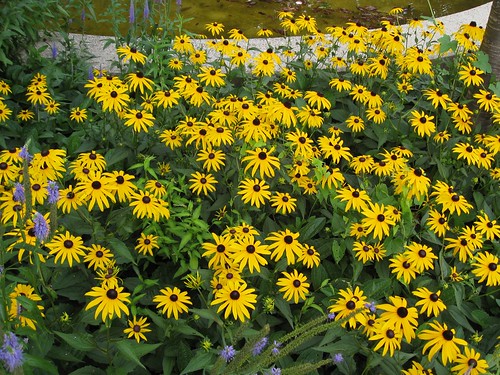
Black-Eyed Susans, native wildflowers to my region

Happy gardening!

Friday, February 24, 2012

Are you Buying Tap Water For $4 a Litre?

Today I'll be talking about bottled water and recycling. "The Story of Bottled Water" is a quick illustrated video (by the same woman who narrated "The Story of Stuff") informing you about the realities behind bottled water. I apologize for the bad formatting of my blog (there was nothing I could do about it), but please sit back and watch it right now:

Recycling, although not 100% effective, is very important. DoSomething.org has partnered with Nestle (which is weird, because Nestle is known as one of the most socially and environmentally irresponsible companies on the planet) to encourage recycling. Please go to http://www.dosomething.org/trashy/gallery for the rest of these funny pictures and statistics:


People often think that buying some bottled water and then throwing it away afterwards doesn't really hurt the planet. But it does. Here is a rather ironic article, "'How Bad For The Environment Can Throwing Away One Plastic Bottle Be?' 30 Million People Wonder", that sums up my point nicely: http://www.theonion.com/articles/how-bad-for-the-environment-can-throwing-away-one,2892/.
I understand how you might already have a bunch of water bottles stored away in your cupboard or ready to be recycled. There's nothing you can do about all those water bottles you consumed in the past, but you can become part of the movement by not buying any more and by reusing those which you already have!
I took this picture of a water bottle bird feeder while out walking with my aunt and cousin:
You can also use old water bottles to store change, nuts/bolts/nails, collections, and as pencil holders and cookie jars (once you cut the top off). Don't store anything wet or moist in water bottles, though; that could make you sick. For the birdfeeder above, I recommend only using it in dry weather, and if it rains, you should change it.
On the whole, bottled water should be avoided! If you haven't watched "The Story of Bottled Water" yet, please scroll back up and watch it or go to http://www.storyofstuff.org/movies-all/story-of-bottled-water/ to see it at it's original website. If you are really interested in this sort of thing, you should go on a movie marathon and watch all of "The Story of..." videos. I've only seen three, but that was three really good videos I spent my time watching!

Friday, February 17, 2012

10 Easy Ways to Save Water

Water is everywhere, but clean water is not. We must conserve water in order to: 1; prevent it from becoming polluted after it goes down the drain, and 2; to stop whole lakes from being drained in order to provide for the consumption of this precious resource.

Here are a few ways to save water:

1) Place a sealed plastic container in the tank at the back of your toilet. This will prevent the tank from filling up so high, which will mean that less water goes into the bowl every time. Of course, you could always install a low-flush function to your toilet instead.

2) Install a low-flow showerhead in your shower. This can save a lot of water, while still having the same amount of pressure as a regular showerhead.

3) Use aerators on all of your taps. These, too, maintain a good flow, so you'll feel like you are using a regular tap. All the bubbles in the water can significantly reduce your water usage.

4) Stop those leaky taps! See an old blog post of mine for details: http://hugatreetodayseriously.blogspot.com/2011/12/stop-those-leaky-taps.html.

5) While brushing your teeth and doing similar activities, make sure to leave the tap off!

6) When doing the laundry and dishes, only wash full loads.

7) Use the dishwasher instead of washing by hand. It actually saves water! (Relieved?)

8) Grow plants that are well-suited to your region. These plants are probably less finicky and will use less water. For those of you who live in Canada, you can get some truly fantastic information about which plants are native to your region at http://www.cwf-fcf.org/en/what-we-do/habitat/resources/native-plant-encyclopedia/. I'll talk more about gardening, however, as spring approaches.

9) Place a rain barrel outside your house to collect rainwater. This can be used to water houseplants and your garden. Snow can also be used to water house plants, but be sure that it is properly melted first-- you don't want to freeze your plants!

10) Lastly, when cleaning your driveway, sweep it instead of washing it with the garden hose.

Fun Fact!
Water is so essential to life that it has collected many names over the years, and, of course, it exists in many different languages. Here are some other names for water:
  • H20
  • Aqua/ Aqua Pura
  • dihydrogen monoxide
  • Adam's ale (Australian slang)
  • eau (French)
  • agua (Spanish)
  • shui (Chinese)
  • fisherman's daughter (Cockney slang)
  • ten furlongs mile and a quarter (Cockney slang)
"Pass the ten furlongs mile and a quarter, please."
"Okay, but make sure to conserve it, otherwise we won't have any aqua pura left!"